

IT ALL SOUNDS THE SAME...
A potted history of Death and Black Metal.

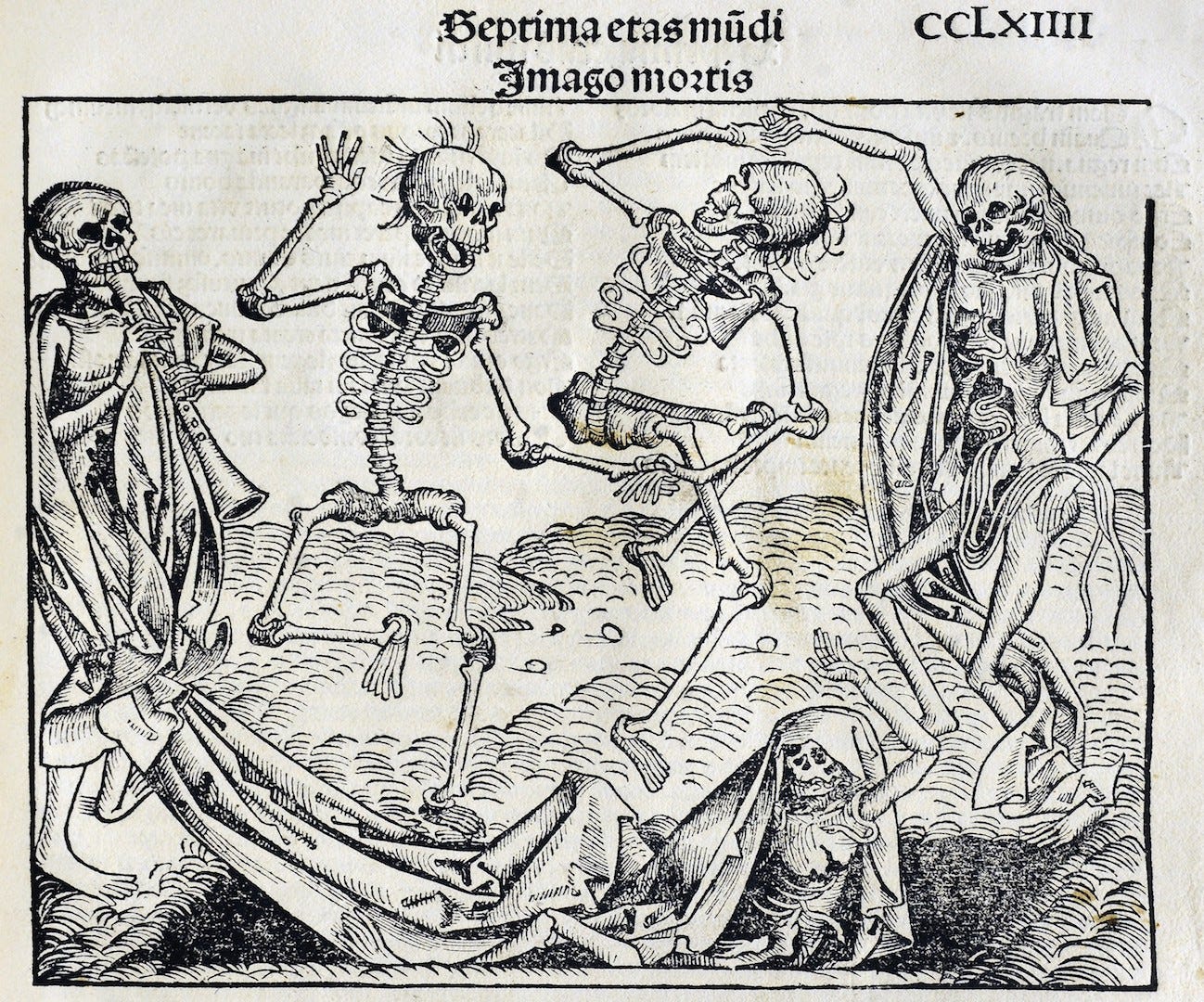
IT ALL SOUNDS THE SAME…
To some, mostly precious gatekeepers, it is a sign of laughable ignorance.
To others; myself, included, it is an understandable and genuinely curious question from the uninitiated.
I’ve been asked a few times in recent weeks “What’s the difference between Death Metal and Black Metal? It all sounds the same!”
And fair enough; if you’re not used to listening to extreme music, I can totally see how one barrage of screaming banshees can sound like another blasting wall of unintelligible percussion and growls.
First encounters with the genre almost always feel baffling; the music being too fast, chaotic, abnormal and incomprehensible to be anything other than a significant culture shock, at least, compared to more conventional, mainstream and easily accessed ‘normal’ music.
I totally get it. We all felt like that when we were first smacked roundly about the chops by it. The only reason we’re not feeling like that anymore is because of a familiarity that is fueled by curiosity and perseverance.
Because you do need to persevere to get under the skin of Black and Death Metal, and all its glorious sub-genres and nuanced incarnations. And that’s not for everyone.
Indeed, many will justifiably ask why anyone should have to persevere to be entertained. Again, another fair question.
The answer though, is that for those willing to persevere, to dedicate huge portions of their time to the cause of understanding extreme metal and enjoying it, it is far more than entertainment. It is, quite genuinely, a way of life; a necessary sustenance that you engage with far more deeply than as a passing interest.
This is why the fanaticism at the heart of it often stays with listeners forever; it instills values, expectations and a sense of discovery and motivation that goes far beyond the music itself. It is the root of the kinship that can be found in any extreme Metal gig. Despite appearances, Metal fans, especially, are some of the most welcoming, calm and trouble-averse people you’ll ever share a performance space with. I’m 56. I’ve been listening to this music (and related genres) all my adult life. I have never - not once - witnessed any concerning antisocial behaviour at a gig.
At least, none beyond the odd incoherent drunk; annoying, but basically harmless.
Yet on the streets outside the venues, I have been accosted many times by incoherent “normies” who take offense at long hair, tattered jeans or other non-conformist elements of the typical extreme metal visage.
So; who’s the problem?
The point is simply that perseverance leads to passion, leads to hardcore fanaticism, leads to lifestyle, leads to lifelong involvement. It’s more than music.
Once the threshold is crossed, the door rarely opens again to the outside world.
More than a clique. More like a family.
So; what’s the difference? It all sounds the same.
To best explain it, I’ll give you a potted history.
I stress that it is a history as I understand it, fact-checked to a certain extent, but equally, applicable to my own experience and biases. It’s exclusively my interpretation of significant elements, artists and events.
It’s fine to disagree with me; it’s a personal thing.
But one thing’s for sure…
As with so many things in life, it all begins with Motörhead.
IT’S ALL MINE
In 1980, I bought my first record. Antmusic, and a door of perception was blown open in my mind. I realised, after the first ten years of roaming anonymously through life, not knowing what I was about, in an instant, what my purpose was.
What was MINE.
I remember the moment as clearly as breakfast. That little seven-inch single changed everything about my world, and the damage it did has sustained me for close to fifty years.
The tribal drums of Kings of the Wild Frontier were endlessly exciting, infinitely engaging and extremely motivating. They were delivered to me on the cusp of great change; a few months later, away at secondary school, I lent on music for comfort, inspiration and companionship. I was immediately under the influence of my elder peers, who happened to mostly be obsessed with the burgeoning NWOBHM and rock scene. Bands like Saxon, Rainbow, AC/DC, Magnum, Thin Lizzy, Tygers of Pan Tang and, of course, Iron Maiden.
The last band being the most significant by some margin, they were about to release their career-defining Run to The Hills single and third LP, The Number of The Beast.
But before that, I heard Running Free, from their debut, self-titled album.
The drums on that track are significantly tribal to my naïve ears, that connected the dots between them and Kings of the Wild Frontier immediately.
My mind was broadened beyond pop.
I gobbled up rock and metal in all its flavours, from Richie Blackmore to Tony Iommi to Angus Young to Fast Eddie Clarke.
Except I didn’t. Fast Eddie Clarke, Lemmy and Philthy Phil ‘Animal’ Taylor – the three members of the classic Motörhead lineup – eluded me. I didn’t get it. It was such a racket; it was so fast, so rough, so dangerous. The drums were insane. The guitars beyond comprehension. And as for Lemmy’s vocals… my evolving 11-year-old brain just didn’t understand them. I couldn’t see what was going on at all.
It was enticingly intangible.
It took me two or three more years of occasional dips in and out of their discography before the penny truly dropped, and it wasn’t with a record by the original three amigos.
By 1983, the original lineup had split, and Brian Robertson had taken over on guitar from Eddie. The resulting LP, the much maligned (at the time) Another Perfect Day, was the result. It was more melodic, more coherent, more accessible.
At least, it was to me.
No Sleep ‘til Hammersmith had kind of cut through, as had the singles. Indeed, Iron Fist was the track I kept returning to on a Heavy Metal compilation LP I had received for Christmas.
So I was perfectly positioned to be manipulated by the new Motörhead album, despite dismissive responses from my peers, who shared an equal disdain for Motörhead as they did for punk. Inept playing, apparently. Just a noise. No artistry.
Nevertheless, Dancing on Your Grave was the third track on Another Perfect Day and I couldn’t get enough of it.
I played and replayed it.
And I never went back.
The unique thing about Motörhead is how they were so wonderfully genre-less. They bridged the gap between Punk and Metal. Lemmy famously always insisted they were neither; they just played Rock and Roll. Pull the songs apart and the resulting component pieces confirm his statement but put them all together again and it is a grotesque, misshapen and entirely individual interpretation of such a standard descriptor.
The earlier, cooler LPs had defined their entirely new sound; Overkill, Bomber and Ace of Spades, followed by the aforementioned landmark live LP, No Sleep…, are rightfully considered the band’s greatest works by most fans. Fair enough.
And those records also had the most profound effect on music, more widely, too.
The two sides of Motörhead ended up dividing attention and spawning greatness that would resonate down the years and end up defining Black Metal, Death Metal, Hardcore Punk and every other fiendishly noisy subgenre of music.
NWOBHM GOES STATESIDE
In Newcastle, UK, Venom were formed on the basis of taking Motörhead’s sound and adding a mix of punk rock sloppiness, with a dash of evil, Satanic terror to make them even more dangerous.
What started as a joke got taken seriously by a thousand Scandinavian metal-heads, including Quorthorn, who simultaneously created Bathory in their wake; a band that fundamentally inspired the Swedish and Norwegian ‘Second Wave’ Black Metal bands that still reign today.
In Stoke-on-Trent, coincidentally, Lemmy’s hometown, Discharge took Philthy Phil’s drum intro to Overkill and created a career from it that continues to this day.
In Discharge’s wake, an entire D-Beating genre has been inspired to do things themselves, from Sepultura to At The Gates to Wolfbrigade; all on the record as citing Discharge as a fundamental influence on their conception.
In San Francisco, an NWOBHM-obsessed drummer, Lars Ulrich, recently arriving from Sweden, would hook up with guitarist pals and form Metallica.
Not far away, on a very similar timeline, and arguably more importantly to this story, Slayer would form, with a darker tone and a more threatening countenance, directly adapted from Venom as well as the early Motörhead records.
They took those bands’ sound and made it faster, harsher and even scarier.
Slayer would become a foundational inspiration for Death Metal; a genre that was formed almost immediately behind them and a genre which, in turn, would form the anti-inspiration for the tidal wave of Norwegian bands to create modern Black Metal, a few years later.
So, you see? Without Motörhead, none of this would have happened.
USDM
Down in Florida, Tampa became an easy site to call an HQ because the Morrisound Recording studio was situated there that created the defining sound for Death Metal in the 80s.
It was such an important element of early Death Metal, that bands would move to Tampa in their droves to take advantage of its facilities and the growling scene that was forming around it. Rather like a small-scale pre-emptive behavioural strike that simulated what would happen a few years later with Grunge and Seattle, Tampa became (and is still) associated with a multitude of different bands inspired and motivated to play in a style, evolve it and take it further with each subsequent gig and release.
Starting with Death, who are often credited as kicking off the genre by naming a demo in its honour, despite ‘Death By Metal’ coming out in 1984 at a similar time to Possessed’s ‘Death Metal’ demo too, on the other side of the continent.
Who’s responsible? You decide.
Death remain the kings of classic Death Metal. Bandleader, songwriter and all-round Godhead, Chuck Shuldiner’s death in 2001, from complications related to a brain tumor, secured their legendary status, as if their definitive evolution wasn’t enough on its own.
As well as traditional Death Metal, they also introduced the concept of Technical Death to the world and, as their instrumental skills continued to grow, so did the expectation of what Death Metal could represent; in speed, technicality, emotional resonance, popularity and, importantly, progressive impact.
More importantly for me though, in 1987, Deicide were formed.
They have a different take on Death Metal and one that resonated more with me than Death did. It wasn’t technical. It was just full-on. It still is.
The complexity and attraction coming from the speed the band plays, but also from the catchy and rhythmic way that frontman Glen Benton delivers his scathing sermons against organised religion.
He went so far as to burn an upside down crucifix onto his forehead in 1989 which I remember being so scarily extreme it made the band instantly notorious.
His character as a frontman and lyricist – as well as bass player – and his relationship with lightning fast drummer Steve Asheim – has meant that Deicide perpetually release engaging records. THowever, it is still their first four LPs that are generally regarded as their strongest records.
That said, I firmly believe that there are no shit Deicide records, but I am biased.
Elsewhere in Florida many other bands were forming. Of course, many were lost to time, but still, several created some hallmark LPs that remain cornerstones of the genre. Bigger names include Morbid Angel, Atheist, Cynic and Obituary, among many more.
Check them out.
While all this was happening in swampy Tampa, other Death Metal bands were forming and delivering their own take on the Florida blueprint of blasting drums, bellowing death growls, complex, dive-bombing solos and light-speed performance.
In New York state, Cannibal Corpse, Suffocation, Immolation and Mortician plied their wares; often foregoing speed and technicality for a more atmospheric, muddy approach and, in Mortician’s case, a bed of horror movie samples, too.
The more ‘Caveman’ approach still resonates with new bands, worshiping at the altar of Suffocation et a, forming and recording new examples to this day.
There were, literally, hundreds more American Death Metal bands, throughout the 1980s and ‘90s, that grabbed what the genre had to offer and took it in new directions.
One that particularly resonates with me is Exhumed, from Wisconsin, who developed the Gore Grind scene along with several other bands from all over the world… but there’s something about Exhumed, especially, that never gets tired.
They’ve been releasing great records, all the way to this year’s Red Asphalt, which, no doubt, will be among my favourites of the year.
Skinless, Devourment and Malignancy are other names associated with Brutal Death Metal, closely related to the technical bludgeon of Suffocation; focusing on a barrage of groove and intricate, incessant pummel, rather than subtleties of melody and catchiness… and subsonic vocal tones.
As time went on, Deathcore eventually became a thing, where bands like Job For A Cowboy, Whitechapel and Despised Icon forged a marriage between Hardcore breakdowns and vocals, with Death Metal riffs and complexity.
Those bands are an exception, but generally, it’s a genre that’s lost some of its sheen in recent years, with a reputation for the facile fashion of band members, who can convey a clichéd image of tattoos, eyeliner, manicured haircuts and piercings that seems to outweigh the intensity of the music.
Style over substance that can be accused of flying in the face of what Death Metal stood for in the first place.
But Deathcore is also a great gateway into the wider aspects of the Death Metal genre so, for me, it serves as a vital lifeline for the music, even if it’s easy to sneer at it.
But if North America has always felt like the natural home of Death Metal, it doesn’t mean the genre didn’t stray further afield too.
Much further.
EUROPE AND THE UK
Death Metal quickly became a truly worldwide draw, with bands like Death/Grinders Wormrot, from Singapore, Gorevent (and this year’s incredible Invictus) from Japan, Australia’s Disembowelment, Fossilization and Krisiun from Brazil, Katelpsy from Russia, Suffocated from China and Botswana’s Overthrust proving that every continent on earth - barring Antarctica - is represented to greater or lesser degree.
And let’s face it, at its most populace, Antarctica has around 5000 people living there, which is not a huge market for Death Metal to thrive in.
But it was the UK and Europe where the Death Metal scene really flourished in response to everything that was happening in North America in the 1980s and ‘90s.
The UK bands had a skewed take on its interpretation.
Discharge had played a bigger part in their culture, as well as the underground crust movement with bands like Deviated Instinct, Electro Hippies, Extreme Noise Terror, Amebix, Doom and Antisect straddling the gulf between hardcore and metal, creating a hybrid form that was far more rough and ready, less flamboyant and much more politicised.
By far, the band with most renown is Napalm Death, who introduced Grind to the world, before doubling down on their own moral, punked up and visionary take on Death Metal tropes.
A purer take on genre tropes evolved from Napalm’s Grindcore influence with the magnificent and timeless Carcass, who seemed to redefine their sound and the definition of Death Metal with each revolutionary new release.
Bolt Thrower erm… threw… Warhammer 40K into the mix and resonated beyond the confines of the tiny scene because of it. Bands like Benediction, Cancer, Paradise Lost and My Dying Bride each brought a unique vision to the genre - from NWOBHM stylings to gothic Doom.
Dewsbury, a small market town in the North of England, situated between Sheffield and Leeds, was the home of Peaceville Records, who played no small part in cementing the UK scene as an engaging, diverse and open-minded interpretation of what a Death Metal influence could really mean.
The modern day UK scene feels more vibrant than ever. Bands that continue to fly the flag for Death Metal, in all its guises, include Cryptworm, Slimelord, Vacuous, Brainbath, Consecration, Coffin Rot, Party Canon, Grave Miasma and Cryptic Shift.
All of them raise the bar of expectation in their own way.
The UK scene continues to flourish, often seeming to centre around the prestigious London label and distro, Me Saco Un Ojo for pioneering new flavours.
On mainland Europe, the Netherlands gave us Asphyx, Gorefest and Pestilence, while France and Germany added the technical refinement of Gojira and Necrophagist to the mix, respectively.
Amongst a ton of other bands, obviously.
And so, the pus-ridden plague spread. These days, Copenhagen, Denmark is something of a hub for Death Metal, with the label and distro Extremely Rotten Productions not only responsible for a network of players in bands like Undergang, Phrenelith and Hyperdontia but also for celebrating the form with festivals and gigs throughout the year.
SWEDISH DM
But going back to the 90s, Scandinavia - and especially Sweden - created the most fanatical following for Death Metal in all its forms, outside the USA.
Still evergreen today, the hallmarks of the Swedish Death Metal that spewed forth from Nihilist’s demos, before the band became Entombed and released Left Hand Path in 1990, which is generally regarded as the finest example of the form, are prevalent.
That landmark LP was closely followed by Carnage’s Dark Recollections; a band who mutated into Dismember, who released the equally formative Like An Ever Flowing Stream, in 1991.
But Entombed, Carnage and Dismember weren’t alone; the immaculate Grave, though slightly on the fringes geographically, still reveled in what would become known as the “Stockholm Sound”, which revolved around a recording style that came from the city’s Sunlight Studios and was very much Scandinavia’s Morrisound Music.
The hallmark revolved around the bands’ use of a specific type of guitar distortion pedal; the Boss HM2 Heavy Metal.
When Nihilist were in the studio, one of their guitarists, Leif Cuzner (RIP), “dimed” the pedal for the recording of their seminal Premature Autopsy demo.
He maxed out all the settings and unwittingly created a crushing guitar tone that would echo down the decades as a trademark of an entire scene in the process.
Vastly overdriven and repulsively noisy, the sound of a flat out HM2 is ferocious and immediately identifiable. The “Swedish Buzzsaw” is still the torn out spine of the subgenre today, and it has ended up becoming a worldwide phenomenon of its own, with bands like Entrails, Fuming Mouth, Nails and Black Breath perpetuating its iconic sound in modern Death Metal releases.
Beyond the Stockholm sound, Gothenburg, 300 miles away, on the opposite side of Sweden, was interpreting Death Metal in its own way, too.
A more melodic way.
The ferocity of Entombed and Dismember blew a generation of underground metalheads away, but the bands of Gothenburg mixed it with traditional Heavy Metal elements and again came up with a new interpretation; retaining guttural growls, chugs and distorted ferocity, but adding in twin guitar leads with an emphasis on Iron Maiden-inspired melody.
‘Melodeath’ grew from At The Gates’ early, dirty, work on Peaceville to their monumental fourth album, on Earache Records, Slaughter Of The Soul, in 1995.
Justifiably hailed now as a metal classic, it inspired the New Wave Of American Heavy Metal - bands like Shadows Fall, Killswitch Engage, God Forbid and Darkest Hour, as well as a multitude of other bands worldwide, equally informed by other Swedes, In Flames, Soilwork and Dark Tranquillity.
Elements of the Stockholm Sound have since filtered across the entire subculture of Heavy Metal, with the pace, drum-style, staccato vocals and lead guitar attack now being as much a fundamental to broad swathes of all sub-genres of Metal as doom-laden Sabbath riffs.
Sadly, in September last year, Tomas ‘Tompa’ Lindberg, vocalist in At The Gates and cornerstone personality of Extreme Metal, died from cancer.
A huge loss, and At The Gates followed his death with their final album with Tompa, the blistering Ghost of Future Dead, in April this year.
Many of the songs’ vocals were recorded shortly before he went into hospital for surgery, sadly never to recover.
Rolling back 35 years again to 1991, and Sunlight Studio was earning its reputation for enabling the sound of HM2 Death Metal and all that that entailed.
This was very much down to the skills and passions of its owner and producer, Tomas Skogsberg, whose work was fast becoming legendary in the underground.
So much so, in fact, that a young Death Metal band from Oslo, in neighbouring Norway, recorded their debut LP (again, for UK’s Peaceville label) in its hallowed halls, in 1991.
And this is where the roads converge between Death and Black Metal.
Darkthrone had recorded several Death Metal demos since their formation in 1986, as mere pups, obsessed with everything that was happening in Florida, New York, Bay Area and Sweden. Their primitive, extreme but accessible songwriting resulted in signing to Peaceville Records, recording at Sunlight Studio and releasing Soulside Journey in 1991.
However, by the time it was released, Darkthrone were already on the turn.
TRUE NORWEGIAN BLACK METAL
Another band from Oslo, with more renown at the time, Mayhem, had created a stir with their anti-music.
Lead band member, record store and label owner, scene Godhead and soon-to-be murder victim, Euronymous, had declared Death Metal over-indulgent, too polished, popular, commercial and sold out to be relevant.
He declared, instead, that the only true metal was as rough as a badger’s arse, dedicated to a DIY aesthetic, original, Satanic and vile.
The worse it sounded the better.
Anything that could be done to make it repulsive, shocking and as defiantly unpopular as possible was the only way forward.
Anything less was for poseurs.
Mayhem had released the transitional noise-fest mini-LP, Deathcrush, in 1987, but it was their in-concert bootleg, Live in Leipzig, that had been circulating between tape-traders since 1990 that was causing bands to re-think their approach.
And that definitely happened to Darkthrone - with drummer Fenriz and vocalist/guitarist, Nocturno Culto, in particular.
Soulside Journey had been received quite well and Peaceville were keen to follow up and build on its underground success, but Darkthrone had other plans.
A now familiar story for Darkthrone; their career continues with the recent release of their 21st LP, Prehistoric Metal, and they’re constantly evolving and devolving their sound, constrained by nothing but their creativity.
So retrospectively, it’s no surprise that the band went into the studio (the tiny Creative Studio in the band’s hometown of Kolbotn, a suburb of Oslo) and turned Peaceville’s expectations on their head.
Unbeknown to Peaceville at the time, the band had taken Euronymous’ manifesto and run with it. They agreed that Death Metal had become bloated, over-produced and lost its niche attraction.
It had become – shock – popular.
Death Metal also didn’t reflect their story. A lot of it was crafted in the swampy climate of Florida and, in a twisted way, the sound and the content reflected that. The bowel-wreckingly low vocals, the bass-heavy soundscape and the flamboyant soloing and technical intricacies suddenly felt entirely inappropriate to them.
They decided to take some of the songs they had already written for their sophomore Death Metal record and convert them to their new vision, supplementing them with a couple of entirely new songs that were written with a new style in mind.
That style retained elements of the Death Metal they had once adored; the blast-beat drums, the indecipherable vocals, but warped everything else away from what anyone would expect to hear.
Instead of a full, meaty, gore-infested production, they developed a sound that was as fragile and cold as their own environment was; there was very little bass in the mix; everything was high-pitched; all treble and a bit of middle.
Instead of the typical grisly-gore subject matter, Darkthrone drew more on the heritage of Norway, combining it with a heavily pagan element and, importantly, a recognition of nature in all its formidable, freezing forms.
Instead of vocals that were designed to resemble the release of post-mortem gas from a bloated corpse, their take on unintelligible violence was banshee howls that suggested, instead, imps, trolls and demons in legion.
Likewise, their guitars were excrutiatingly trebly and tremolo-driven, with simple riffs that doubled down on repetition to bring a trance-like mist into the ears of the listener.
They created something so cold you could see your breath when you exhaled while listening to it.
Even the LP’s artwork forewent the gaudy colour and horrific abstractions that Death Metal records had made staple. Instead, a blurred, lo-fi black and white photograph of their guitarist, Zephyrous, hurdling a wall in an overgrown and forgotten stretch of woodland.
With A Blaze In The Northern Sky, Darkthrone established every rule that the genre would follow, and many of which that are still stalwart cornerstones to this day. They defined an aesthetic that underpins a genre in a multitude of ways, and a big part of its inspiration was their objection to Death Metal and what it would become.
So as understandable as it is, that a listener who is unfamiliar with the music might think it all sounds the same, the truth is, in many deliberate ways, Black Metal was set up to be in direct opposition to Death Metal.
Death Metal reveled in the production. Yes, ‘murky’ was often the result, but the intended destination was (mostly) hi-fidelity. At least, in the 1990s. If not hi-fi, then cavernous.
Black Metal aimed for murky in the first place; ideally an ice-cold murk, where what you COULDN’T discern was probably more important than what you could.
It was lo-fi, DIY at its very best; unbridled creativity, freedom to experiment and the courage to do so. In many ways, it could only have happened at that precise time, in that precise place. The second wave of Black Metal’s inception is undeniably a product of its environment and the people so immersed in the nuances of its meaning.
The conserrvative christian cultyure of Norway at the time fueled the rtebel;lion in the artists that lived there. They church and its tyrannic over-zealous wiping out of Norway’s pagan heritage inspired hateful creativity and A Blaze… was the first ‘proper’ example of it.
Peaceville were pissed off.
They originally said they wouldn’t release the album. It sounded worse than the band’s cassette demos.
Darkthrone stood by their art. If Peaceville didn’t want it, Euronymous would release it on his own label, Deathlike Silence Productions.
Peaceville conceded.
A Blaze In The Northern Sky became one of the best-selling releases of the label’s catalogue and, in conjunction with the two LPs that swiftly followed, 1992’s full Black Metal opus Under A Funeral Moon and 1993’s timeless Transylvanian Hunger, the Unholy Trinity dwarfs the sales of any other artist or collection of records on Peaceville to this day.
Meanwhile, elsewhere in Norway, Mayhem’s ramshackle anti-influence - and now Darkthrone’s too - was heralding a brief period of seismic creativity across the country.
Perhaps, most famously, a loner with dodgy political opinions, Varg Vikernes, from Bergen, on Norway’s west coast, set a string of controversies into action with his debut self-titled release, Burzum.
He took Darkthrone’s template and simultaneously created a one-man version of it; perhaps even more raw and with a lean into pagan nationalism, lo-fi inventiveness and DIY determination that shames many of the other Black Metal bands of the period.
Varg soon became the poster child of Norwegian Black Metal; more for controversies than the music, with arrests, church burnings and abject racist rhetoric his calling card.
As vile as his politics is, there is no denying the power of his music, which rarely ventures beyond the atmospheric/Tolkien-eaque historical fantasy in subject matter. The sketchy stuff was mainly conveyed in interviews rather than (ahem) on the record.
Anything for some publicity.
While one could never forgive the politics, it is equally clear that Varg Vikernes remains a somewhat autistic teen-minded, RPG playing geek with a drive to shock and cause a statement.
I’m not justifying anything; just simply reminding us all that teenagers revel in pissing off the establishment in ever-more extreme ways and, although he still spouts his moronic nonsense these days, it’s hard not to see him as a railing idiot still dining out on controversial “glory days”.
The very definition of the need to separate the art from the artist, I’m personally willing to make that effort. I know that my life would be that much more bereft of inspiration without Burzum’s music in it.
Vikernes pioneered several different aspects of Black Metal, particularly elements of the sound; vocals at one point were screamed through a helmet comms microphone to give them an extra shitty tone. The drums were ineptly self-played, emphasising enthusiasm over nuance; Vikernes is clearly not a drummer.
The repetitious riffing was firmly established by him as a cornerstone of the style. The pagan/Satanic angle, alongside the high fantasy, cemented as core lyrical content. This aspect alone pushed the genre further forward, especially apparent in the mature fourth Burzum LP, and undeniable classic of the genre, Filosofem.
Equally, the one-man-band studio project, a necessarily symbolic and practical solution to writing and recording such niche, self-centred music, is still a pillar of the genre’s aesthetic, and was given validity as the ultimate misanthropic pariah statement for the music’s creation and “brand” integrity.
Furthermore, when Vikernes was incarcerated for Euronymous’ murder in 2004, circumstance (solitary confinement, limited resources beyond a PC and an old synth) proved a creative instigator for a sideways move that developed a whole new sub-genre, Dungeon Synth.
Designed as a way to soundtrack tabletop RPGs with appropriate music, the mainly instrumental music didn’t exist before Varg and Mortiis simultaneously - and independently - brought it into being in the mid 1990s.
What had previously been used solely for atmospheric intros on Black Metal LPs with the odd track on Burzum’s - still comparatively obscure - albums, now delivered stark, medieval, lo-fi and simplistic album-length atmospheric content in its own right.
Mortiis had been the bass player in Emperor, another Norwegian band present at the start of the genre’s second wave. Emperor came from Trondheim, a way north of Oslo, and swiftly forewent the lo-fi abrasion of their early demos for richer, more progressive, synth-driven orchestration with lush production and epic scope, further extending the boundaries of what the Black Metal genre could accommodate.
Dimmu Borgir worked in a similar area to Emperor, but their work was moderately less epic and slightly more pompous. They became one of the most successful Black Metal bands of the 90s and noughties; their drama and accessibility carving a unique spot in the upper echelons of the genre’s commercial hierarchy.
As well as Burzum, Bergen also birthed the incredible Immortal, whose self-effacing take on the dour-faced imagery of the genre’s protagonists is still compelling, thirty years on. They had recruited a young Vikerness on guitar in their previous Death Metal incarnation, Old Funeral.
A little later, but no less impactful, Taake came down from the hills surrounding the city and, along with the hyper-Satanic Gorgoroth, created a scene on the icy coast easily as hard-hitting as the one in the nation’s capital.
Oslo’s Ulver and Haugesund’s Enslaved shared a Viking fascination that further established the genre’s roots in historic pride, folklore, legend and atmosphere.
Satyricon, also from Oslo began as trad Black Metal but ended up bringing Black ‘n’ Roll - more swinging and bastardised sub-genre - to the (black) masses.
I’ve always found them somewhat nondescript and uninspiring, but there you go.
So; all these early bands were instrumental in defining genre archetypes and, against the more rigid boundaries of Death Metal, established Black Metal as a subtly more stylistic broad-church.
EUROPEAN BM
And the vision(s) spread; first across Scandinavia: Sweden’s Dark Funeral, the dogmatically wonderful Marduk and the hyper-melodic and politically controversial Dissection represented ABBA country perfectly.
Finland’s flawlessly tuneful but politically abrasive Horna, Sargeist, Behexen, Beherit, Satanic Warmaster, Impaled Nazarene and Archgoat.
The UK took its piece of the pie, with the pomp shock of Cradle of Filth and the epic nature of Winterfylleth, but despite there being many low-tier Black Metal bands, few broke out from the underground like they did elsewhere.
Blood Countess remain one of the most exciting UK bands right now, though, and certainly have the potential to resonate beyond the hardcore in the future with their traditional take on Black Metal with a high concept of Elizabeth Bathory’s vampiric crimes and compellingly screeched female vocals, courtesy of The Cuntess.
As the years passed, Europe became a hotbed of distinguished bands, many of whom emphasised their own take on the defined sound of Black Metal.
In France, Les Legions Noires established itself as a black circle of misanthropic, lo-fi disgust, with bands like the long-serving Mutiilation, as well as Peste Noir waving the flag for lo-fi Trve Kvlt activities. Blut Aus Nord, Deathspell Omega and Alcest all added Franco-progressive elements to their sound, which ensured complexity, subtlety and depth were just as vital to the genre as shit speakers and inept timekeeping.
But French favourites of mine are Nocturnal Depression, whose mournful take on melody helped to establish Dark Suicidal Black Metal as yet another differentiated sub-genre of Black Metal.
Eastern Europe tends to deliver ultimate anthemic melody, with Poland’s Mgła, mainstream B-list celebrities Behemoth and up-and-coming ear-wormers Piołun all representing their country well.
Neighbouring Ukraine has a notable scene, led by the atmospheric Drudkh, and related groups, including Hate Forest and Windswept. 1914 are more bombastic and are thematically rooted in the trenches of the First World War. Their paeans to human cruelty take on a special resonance now that their country is under incessant bombardment from Russia.
And then there’s the morose mortality of Blade and Bath…
Switzerland originally birthed the genre, in many ways, with Hellhammer/Celtic Frost, and it still delivers exciting and groundbreaking music today, in the form of Vìgljós Paysage d’Hiver and Bölzer.
Germany offered us Bethlehem to start with, but more recently Mgła-inspired mysterions Groza and more WWI enthusiasts, Kannonfieber, who all continue to bring new elements into the global scene.
Likewise, Greece, Turkey, Italy, Iceland… all have their own unique scenes, each individual and very much motivated by creatively interpreting the genre’s boundaries that were set up so long ago in Norway.
For me, the most interesting of the European scenes stems from Portugal, where another Black Circle evolved, and has its hallmarks in anonymity, total raw and obtrusively lo-fi recordings, often as solo projects or via shared line-ups. Black CiliceCandelabrum, Consummatio and Irae all come highly recommended if you’re looking for some challenging music that rewards in the long run.
Of course, I’m not even scratching the veneer of the worldwide scene; I’m just name-dropping some favourites that I think are great examples of an incredibly varied form.
Black Metal has reached every lonely corner of the globe; partly due to its themes of isolation, sadness and misanthropy, but equally because the one-man-band cornerstone of the genre really has enabled the music to be created anywhere, by anyone.
USBM
Special mentions, naturally, go to the bands from America, who took the Black Metal ball and really ran with it, from north to south, east to west. Some of the most respected names in the genre - and the most atmospheric, engaging and inventive - come from the huge continent to our west.
North America alone brings atmosphere in abundance from Wolves In The Throne Room, Panopticon and Canada’s Nordicwinter.
Vaste swathes of wilderness are inspiring, obviously.
Elsewhere in the states, Lamp of Murmuur, Lamp of Murmurr, Judas Iscariot and Inquisition all provide some of the world’s most naggingly anthemic anti-anthems, while Leviathan and Xasthur more than represent the one-man-band-depressive-BM quota.
I am less familiar with South America’s contributions, beyond originators Sarcophago and genre-hopping experimentalists, Invunche.
Meanwhile, heading north; Canada, particularly Montreal, has the most engaging current scene from across the globe, to my ears.
The Metal Noir Quebecois scene just keeps revealing more bands that specialise in a hyper lo-fi melodicism that is both enigmatic and addictive.
Forteresse are the uncrowned kings of a scene that, as well as sharing a melodic aesthetic, generally espouses a nationalist independence, steeped in years of oppression by America and Canada. It conveys an indomitable spirit.
To that end, many of the bands vocalise solely in French-Canadian and are politicised in an anti-authoritarian way; nothing to do with race, mind you. The scene’s nationalist pride has far more to do with the fight for integrity than anything resembling racism.
Alongside veterans Forteresse, Spectral Wound have become enormously successful in recent years. Their three fantastic LPs testament to the power of righteous melody and soul-stirring emotive hooks.
More underground but no less important are Conifère and Vespéral, who share members and deliver punked-up Black Metal anthems with simple single-note synth lead lines.
There are none more addictive.
Sorcier des Glaces, Délétère, Csejthe, Crépuscule and Gris are further recommendations that barely scratch the surface of what Quebec has to offer the global Black Metal scene.
COMPLIMENTARY OPPOSITES
So you see - although Black and Death Metal are easily dismissed as sounding the same, there’s much more to it ; not just in the sonic hallmarks, but the intent of the musicians and the credos of the cultures themselves.
In many ways, they couldn’t be more unlike each other… but they belong together.
My journey with Black and Death Metal began in the early 1990s but didn’t become fundamental until 1997/98. Since then, both broad genres, but especially Black Metal, have become a spine from which hangs my passion for the tunes, the culture, the personalities and the sheer inventiveness that still, thirty years on, shows no sign of abating. As the original artists get older, they somehow become more interesting. The youthful naivety and vigor may fade, but the passion and creativity remain – and the driver to create, be original and inventive – still fuels their fires.
Death Metal has become a genre I love, especially the newer bands inspired by Old School fundamentals. The bands on labels like Me Saco Un Ojo, Dark Descent, Nuclear War Now, Invictus and Everlasting Spew all share a drive and aesthetic that is utterly compelling.
While perhaps not quite so individual or creatively ambitious as Black Metal, at least to my ears, Death Metal nevertheless provides a seemingly unending well of inspiration to me, for different reasons. It’s more fun and sensational than Black Metal. Although I really enjoy the “Caveman” riffs of the more primitive-minded bands, the genre also offers more complexity and intricacy than most Black Metal does.
So each side of the coin scratches a different itch.
Hopefully this piece has helped differentiate the two genres and has delivered some leads that you might follow and become just as excited as I am. There is a wealth of material out there waiting to be discovered. I hope you find something worthwhile.
Until then, ave, Frostgore Demons!