

NORTT: DØDSSANG
If you hanker for the drones of Sunn O))), the ambience of Jesu and the sheer unadulterated misery of Swans, Danish Doomster Nortt could be your new favourite band.

Nortt: Dødssang
Avantgarde Recordss, 2025.
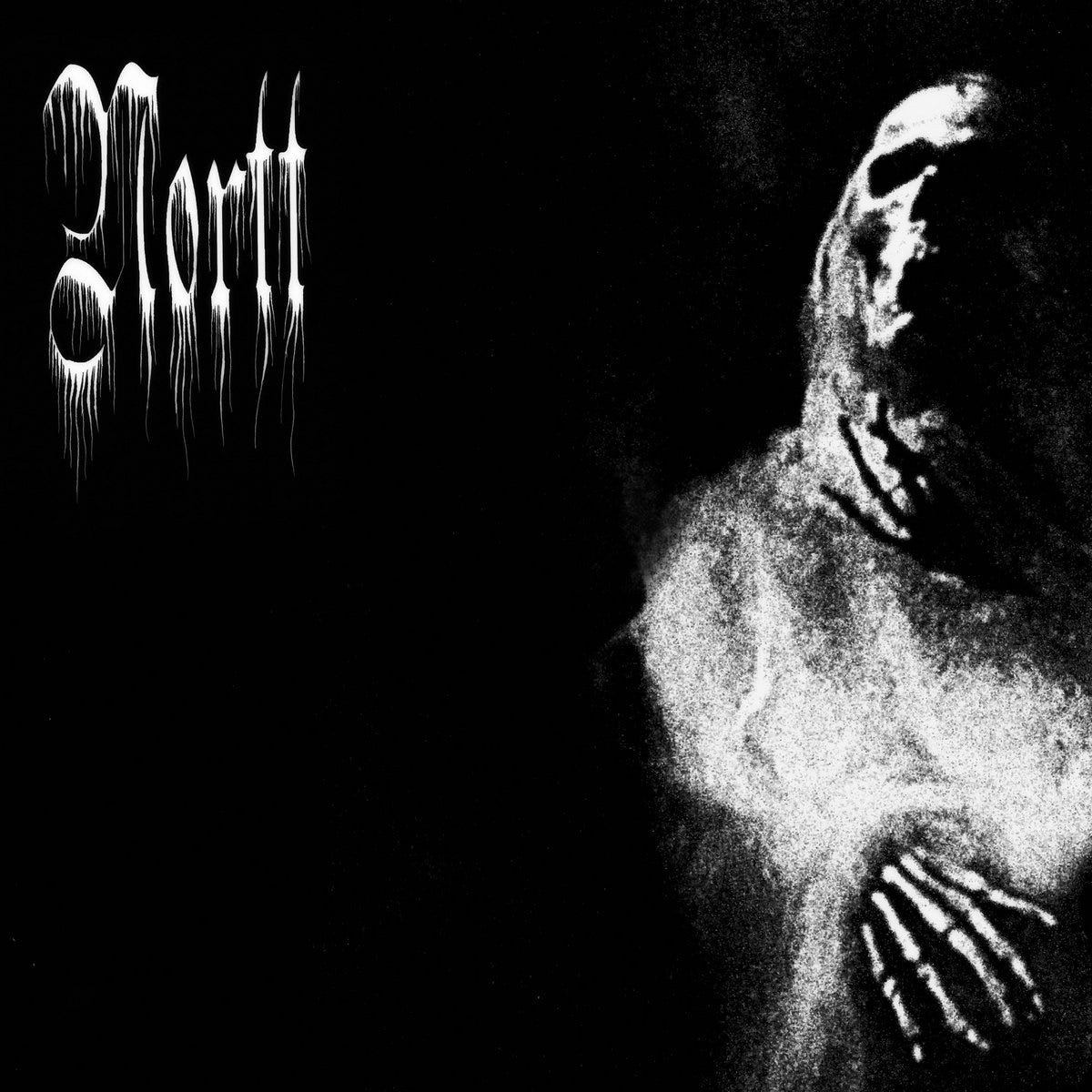
Fair warning: abandon hope, all ye who enter here.
And if you’re not the kind of lost soul that is willing to surrender to glacially paced, meditative and sparsely melodic droning mantras, I advise you to steer clear entirely.
For Nortt is all those things and more. And when I say “more”, I don’t mean it in a positive and joyous way. I mean it in a more desperate, depressing and thoroughly dreary way.
A soundtrack to the near static drift of The Doldrums, if you will.
I happen to find those aspects of music entirely engaging. Initiating a patient and willing mindset that embraces the lull, instead of seeking the thrill, is almost always a rewarding practice. And one of the greatest benefits I have received by doing so is discovering Nortt.
It’s also a mindset that formed a devotion to stalwart pillars of my fandom, be that Sunn O))), Swans, Boris, Melvins, Earth, Jesu or even, in some respects, Neubauten.
Among many others, obviously.
Nortt is different to those examples, but related, sideways. If you dig them, you’ll probably find something you love about Nortt too, in attitude, if nothing else.
You’ll notice I didn’t call out any specific Doom bands in that list. That’s purposeful. Nortt could easily be dismissed or categorised as Doom - particularly the funerary variety, but the truth is more nuanced. If anything fits at all, which I’m happy accept it probably doesn’t, thinking of Nortt more as tectonic, crawling Black Metal is probably more on the money.
If a Burzum 45 was played at 33, and then halved again to 16.5 rpm, you might land somewhere close to Nortt’s sound.
It’s enigmatic and aloof. Howling winds moan, providing the bed for solitary piano chords to lay on. Hung drones of electric guitar blanket the piano, wrapping the frigid mattress in the warmth of familiarity.
Nortt’s bellowing and agonised screams are the voice of the Succubus squatting atop your chest, sucking the breath hungrily from your lungs. The occasional strike of a drum, the hollow futility of your waking moment.
It’s definitely grim.
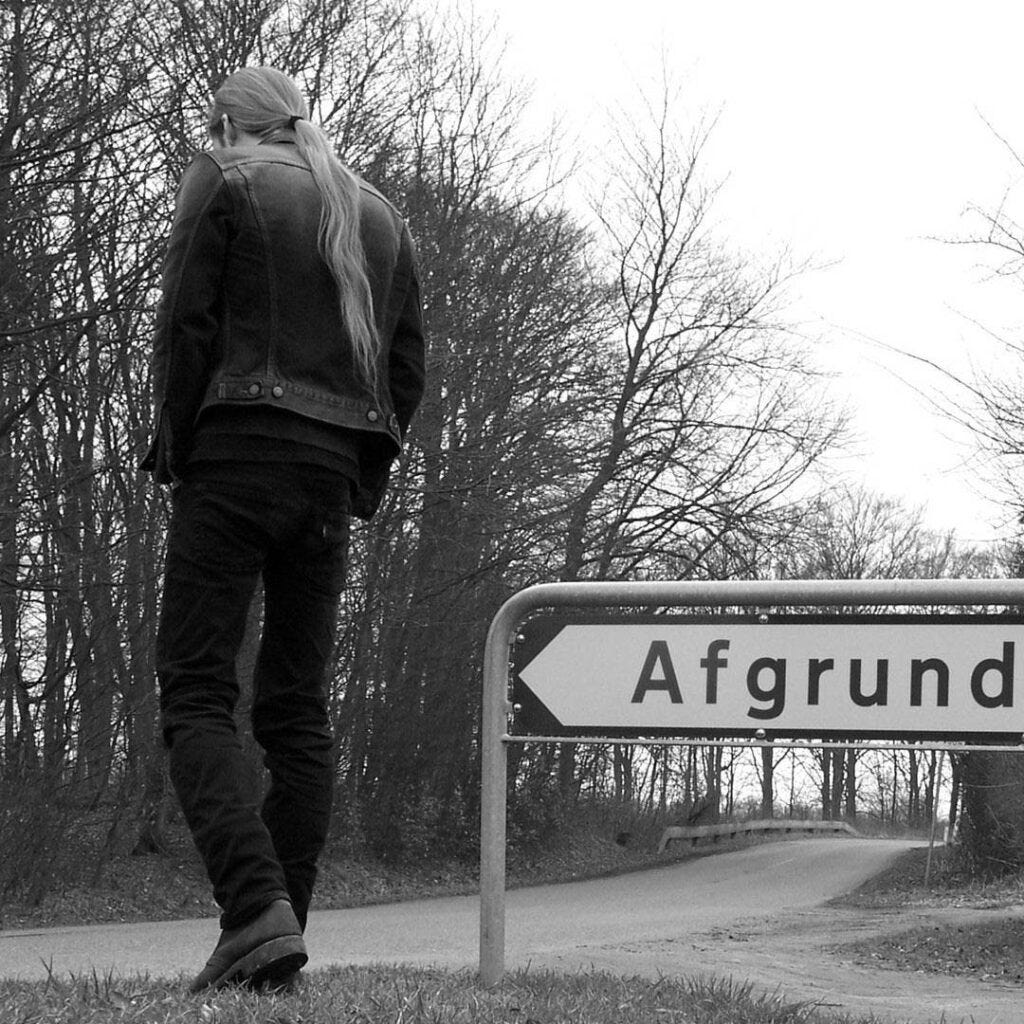
Information about Nortt is scant. It’s a one-man-project from Odense, Denmark, which isn’t known for much, apart from its burgeoning robotics industry and Hans Christian Anderson.
The band is heralded by a mysterious multi-instrumentalist who goes under the same name as his project does. Thematically aligned with Black Metal compatriots, with a lyrical focus on nihilism, futility, Satanism and misanthropy. Remarkably, Nortt has managed to retain his anonymity since 1995. He never plays live and only does interviews by email.
Nortt is occasionally referred to as one of the first Danish Black Metal artists to achieve some renown in the 1990s. A run of rather brilliant demos between 1997 and 1999 eventually ended up foreshadowing the debut EP, Hedengang, in 2002.
It was followed by the first full-length, Gudsforladt, in 2003. By 2008, two more LPs were released before Nortt disappeared for nine years, to come back in 2017 with Endeligt.
And then… silence again until 2025 with Dødssang.
It’s safe to say that Nortt does what he wants, when he wants to do it. He takes his art seriously and seems to surprise himself as much as his followers when the muse returns for another release.
Every album stands up as worthwhile. Each is as haunting as the other, but there’s something about Dødssang that has stuck with me and ingrained itself more than the rest of the catalogue, as much as I have time for every release.
The title track is a short and atmospheric instrumental opener, designed to set the dark-dungeon scene, with whistling winds, grumbling Gobboes and a wretched, damp, rat-invested vibe. It’s only when I write this that I realise it’s a track of its own, because it has preciously read like an intro to the following song, Dødsengel.
If these words ultimately encourage you to listen to Dødsangg, and Nortt, for the first time, I urge you to turn the volume up as loud as you dare (or, at least, as loud as your neighbours will tolerate) because the glacial pace and stark instrumentation of second track, Dødsengel, in particular, is truly awesome at deafening levels.
Such reverent power, cathedral-like space and unholy drones. It’s intimidating, frightening and ritualistically arcane. Truly immense, Dødsengel, for me is the archetypal Nortt track. You’ll know, from the initial lone piano chord and the crushing hung guitar that follows it, if you’re going to love or loathe the band. It will be instantaneous, one way or the other.
The song moves like a sleepy brontosaurus through a swamp of sinking mud. It drags its heels in the most spectacular way for the entirety of its almost-six-minute, non-evolving duration. Pure Jurassic meditative plod.
In comparison, Død Mands Sang is pure pop - for NOW!
Based around a mantra-like melodic piano descent, the repetition is wonderfully immersive. Despite its pace, the song still manages to cement a gnawing hook into your cerebral cortex and tug away at it throughout its duration. The strength of the song is found in its sparsity and how the slow introduction and extraction of the wider instrumentation continues to ebb and flow as it wanders forever onwards.
Alt Er Tomhed follows a moderately more traditional structure. If ‘traditional’ is even a word you can use to describe Nortt. The song revolves more around gruff, mundane and depressed vocals than anything else. The monstrously down-tuned guitar chords that bed the piano and lazily picked high strings recalling Sunn O)))’s more ‘lively’ work.
Again, though: the gentle segueing of the different instruments, drifting in and out throughout the song’s substantial eight minutes lend it an ambient structure that oddly makes the song fly by. A central break of howling feedback breaks the plod as it just hangs there for the better part of a minute, before crawl picks up its tired feet again and continues along the same swampy path it was on before. Almost like a pause for breath - or a drop to the knees to get over a stitch.
There’s a reluctant momentum to the song that really triggers your imagination. The achingly beautiful piano bars that finish the song encourage a vision of a slumbering horizon, ever distant, out of reach, but always in sight. It’s entirely enigmatic.
Now switch off the lights, get under a blanket and close your eyes.
Drift into Ensomhed. In some ways feeling like an extension or second movement to Alt Er Tomhead, its signature high-pitched organ fugue embellishes the drag with the gentle swing of a thurible, releasing clouds of its foul, decaying incense from its movement, to penetrate the nostrils of the faceless dark congregation each side of the aisle.
This sense of occult ritual is only emphasised by the sampled sequence at the end of the song; a soft soundscape of dripping water on stone, damp walls and a lifetime in solitary obscurity.
Suddenly, your eyes are thrown awake by the comparatively thunderous distortion of Iukom Natten; your reverie broken by its ponderous snare and low growling moans.
What Nortt does so cleverly is sequence of the songs, You soon start to notice how seamlessly the compositions blend with each other; their pace never changing, their tones remaining similar, only small compositional variances creating any audible differences to the flow of the album.
The songs feel more like movements of one long piece than separate entities of their own volition. It gives the whole album a unique presence that is broadly incomparable. It really takes some balls to double down on the mundanity and thematic repetition without becoming distracted by introducing too much texture, variance or light into the gloom. It succeeds so well at that - it’s more than ambience but not so much more that the ethereal, misty visage it conjures can be broken into a coherent silhouette.
Nortt’s dedication to the hollow misery of a futile depression is genuinely awe-inspiring.
Bon Til Døden introduces the pacey extravagance of a solitary bass drum boom every five seconds that almost dares to give the song something approaching a ‘beat’. If ‘beat’ is even a word for such a desolate, metronomic and spare accompaniment.
If anything, the momentum gained from its presence births a mind’s eye visual of the battered Nazarene, bruised, bloody and beaten, on his last legs, dragging the cross behind him, exhaustedly climbing Golgotha. But in Nortt’s rewriting of the fable, Christ never makes it to the top of the hill. Never gets martyred. His weak frame falls to the stone path and never regains enough strength to get up again.
Longinus does the job he should have done before the tatty wretch is hoisted high to cement his own legend.
Udslukt wraps up Dødsangg with the detuned toll of a bell, whispering wind and a tinnitus-like drone of high-pitched pipe organ. No accompaniment beyond its own spooky ambience. It delivers a profound end that gently echoes the start of the album, but with a finality that is so desperately lonely.
The result is an album that has taken you on a relentless journey into the black of denial, desperation and a depressive purgatory. It’s not a journey that’s paced in anyway whatsoever. At best it is reluctant. At worst it is what passes in Nortt’s world for wide-eyed optimism: which is to say far more dark, elephantine and miserable than anything you have ever heard conveyed before.
There is a wholly unique mindset at work here. There really isn’t much else that sounds as relentlessly surrendered as Nortt. If that wall of ceaseless, slave-ship marching to slow evaporation of your spirit is something that you find psychologically entrancing, please, drop the needle on Nortt and EXPERIENCE the flow.
It’s not really something you just listen to; it’s something you immerse yourself in.
Jump in wholeheartedly and I guarantee that It will drown you in the most wonderful way.
Ave, Doomsters.
Very much enjoyed reading. I picked this one up last year after a reading a post on Burning Ambulance. I initially discovered Nortt somewhere in the mid noughties with his split with Xasthur. Got Galgenfrist in 2007 and forgot about it. It somehow didn't stick back then. Well, now it does. In contrast to countless other funeral doom / black / drone / wallowing in misery outfits I think that Nortt has some kind of singular vision and he seems to put a lot of thought and effort in the construction and sound of each album. I really can't put my finger on it why I like his albums (when in the mood) while usually giving similar stuff a clear pass. This somehow feels more ... serious?
It's interesting that you name Sunn O))), Jesu, Swans, ... which - for me - only fit on a surface level. I am always reminded of Bohren & der Club of Gore's "Midnight Black Earth" album - it's different, but has got the same vibe.
I mostly try to avoid this kind of stuff but your well written essay has piqued my interest.