

SARGEIST: FLAME WITHIN FLAME
Demonic Lords of The Black Metal Underground finally release their sixth LP on vinyl after a nine month wait following Digital and CD. Have the indefatigable Finns excelled themselves? Lets find out.

SARGEIST: FLAME WITHIN FLAME
WORLD TERROR COMMITTEE (W.T.C. PRODUCTIONS)
LP | CD | DL
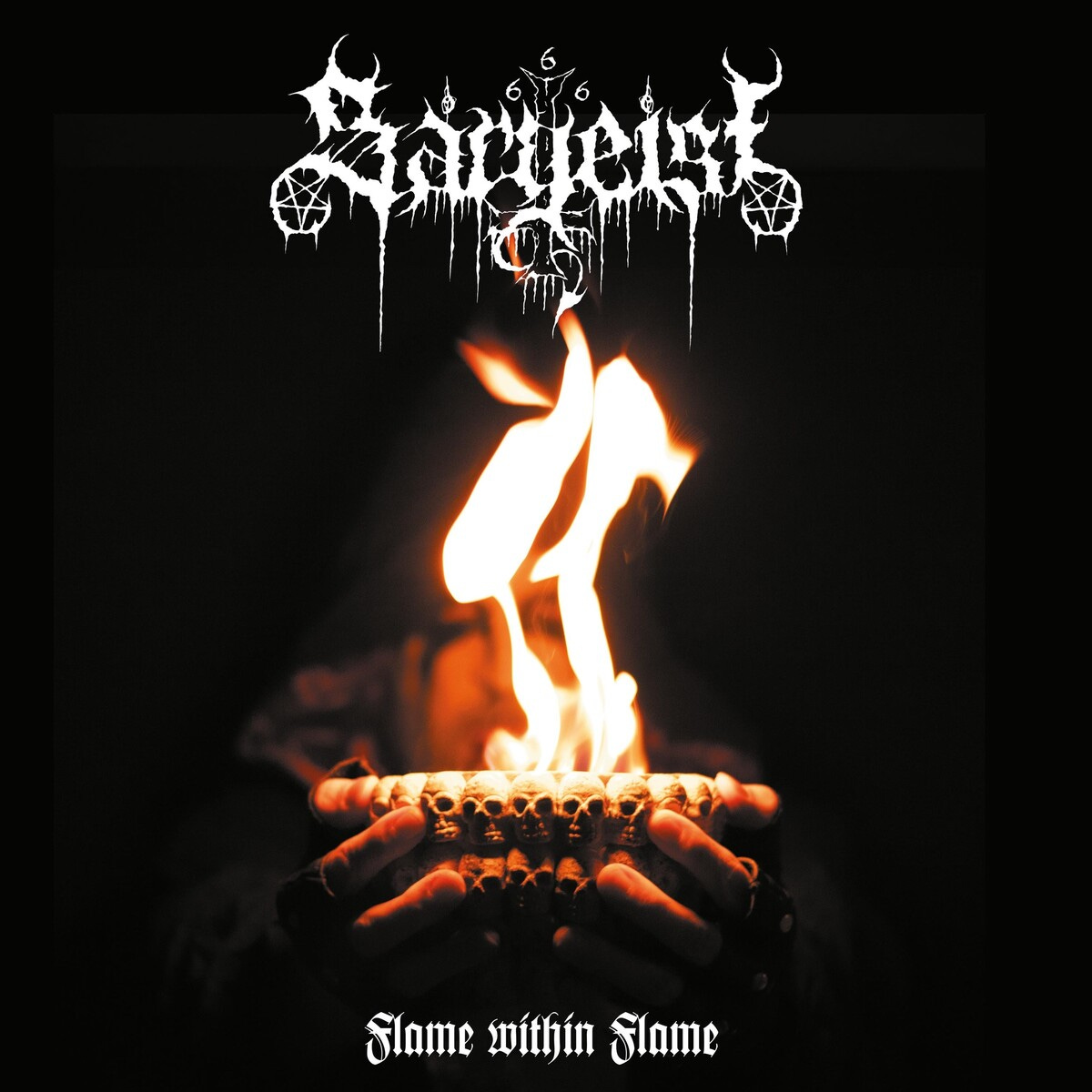
So; there’s no way this could ever be unbiased.
Full transparency: Sargeist’s discography continues to be my most played Black Metal, other than Darkthrone and Immortal, natch. They deliver the goods every single time. The highest quality, most addictively replayable albums, banger after banger.
For those unaware, the band are led by Finnish Black Metal royalty and workaholic, Shatraug. The band was originally a spin-off from his day-job as axe-wielder in pre-eminent Finnish Black Metal band, Horna, that he formed in 1994.
Horna is, without doubt, Finland’s longest serving and most successful Black Metal band. A significant achievement when you consider that their niche is demanded and sustained by their insistence of only presenting their songs in their native tongue.
Constraining, but defining.
They defined the Finnish style; a uniquely melodic and tantalisingly uplifting take on the grimier racket that was being spat out by their contemporary Norwegian cousins, way back when. Horna’s discography is ludicrously huge: at the time of writing, 12 LPs but, incredibly, more than 40 EPs, Splits, Compilation appearances, Demos and Live albums.
You could be forgiven for thinking that that was enough to be going on with for most people.
Not Shatraug.
Along with playing for ten years in Behexen, another incredible top-tier Finnish Black Metal band, as well as contributing to literally dozens of other projects; most notably the fantastic Striges and Hoath. His output really is incredible in quality as well as quantity. I’ve yet to hear anything that he’s been a part of that could be described as sub-standard.
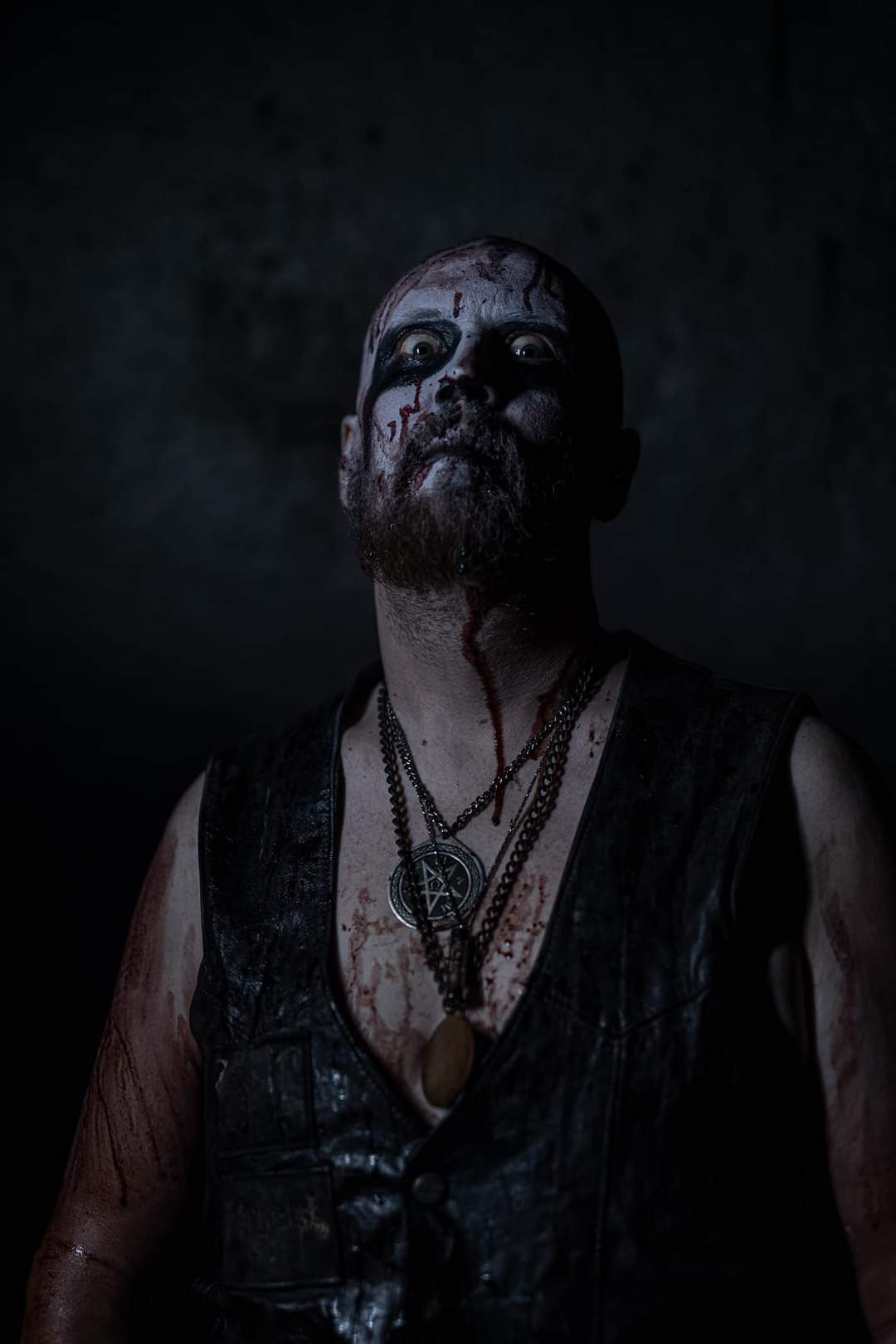
The Finnish Black Metal scene is quite close-knit, with several bands sharing contemporary members or friends from past-career partnerships. The less-than-savoury-but-great-riff-writer, Werwolf, was an early vocalist for Horna and went on to create Werewolf Records, a specialist Finnish Black Metal label with dubious politics and more notably, the huge fish in a comparatively small pond, Satanic Warmaster; a band that continues to release great albums, providing you’re willing to unpick the artist’s politics from the art itself.
Which might make it a good time to add a note on the cultural politics of Finland, for you to take or leave. It’s worth noting the nuance that should be applied, I think. The scene is often sweepingly labelled as advocating Nazism. Untrue.
Hear me out…
The country’s geographic location borders Russia, which has been an ever-present threat in one way or another, for centuries. That sense of threat, as with Ukraine, similarly, has instilled a fierce sense of national pride in the people that is intrinsic to their culture.
Far more the norm there than where I write from in the UK, and presumably so too from other western European countries, as well as for the States, even if you include the misguided and disgusting red cap brigade.
It’s easy to mistake the Finnish cultural nationalism as something more abhorrent.
Indeed, sometimes, it is. But the nuance here is that often, it isn’t.
We can be guilty of judging another country’s nature through the lens of our own, and they don’t always equate. There’s a big difference between nationalism and National Socialism, and the nuance is often missed for the sake of lazy categorisation and over-zealous conclusions based on tangential relationships between band, labels and other associations.
To be clear, I am in NO WAY excusing Nazis. I find them abhorrent in every way. Nor am I suggesting that Finland doesn’t have more than its fair share of sketchy bands and labels. It does. But too often the entire scene is tarred with the same inaccurate brush. Everyone is guilty by association.
So much so, it can feel like too much of a dodgy subject to address. It’s easier to avoid it and consider the vibrant Finnish scene to be a dirty little secret at the back of your record collection. This, to me, is an unhealthy way of looking at it and/or gatekeeping it.
All I’m saying is, there’s more to it than a lazy headline. Do your research, draw your own conclusions. If your own values and politics can be swayed by the bands you listen to, you may indeed be too vulnerable to embrace Black Metal generally, and Finnish Black Metal specifically.
I’m confident that just as people can listen to Satan Worshiping Motherfuckers without becoming one themselves, the same must surely apply to Nazis.
I hope so, at least.
As for this article, as far as I am aware, I’m not giving props to any Nazis.
Shatraug himself has come out in opposition to that political opinion. To the best of my knowledge Sargeist are ‘clean’, so, stand down, soldier.
My last point on the matter is that I am, to a certain extent (dictated by me, for me) able to distinguish the art from the artist. But everyone has their own line. If yours is more sensitive than mine, I respect that. But I am not condoning anything other than the riffs here.
Onwards.
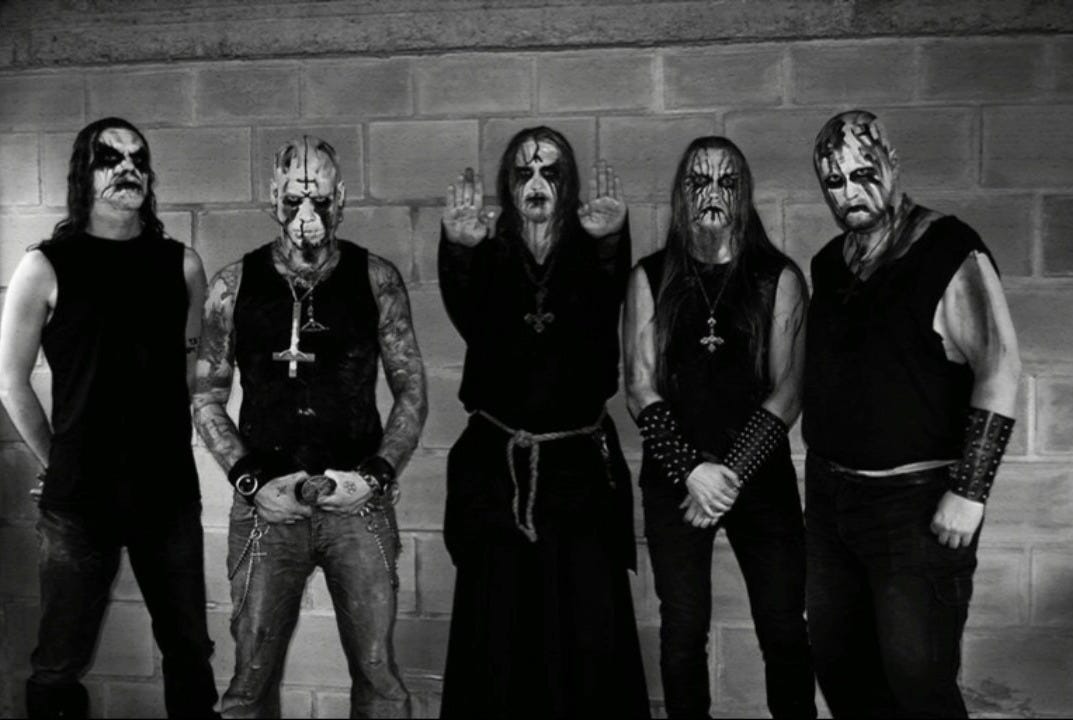
A full list of bands that have been bolstered by Horna members in the Finnish scene is too extensive to list entirely, but notable combos that have benefited from Horna’s elite ranks includes Chamber of Unlight, Baptism, Warmoon Lord, Drowning The Light… the list goes ever on.
So, from that ancestral foundation of riff-writing greatness, Shatraug formed Sargeist, in 1999. He created the name from two German words; Sarg (Coffin - presumably etymologically related to the word Sarcophagus) and Geist, which translates as ghost, or spirit. Haunted Casket. Cool.
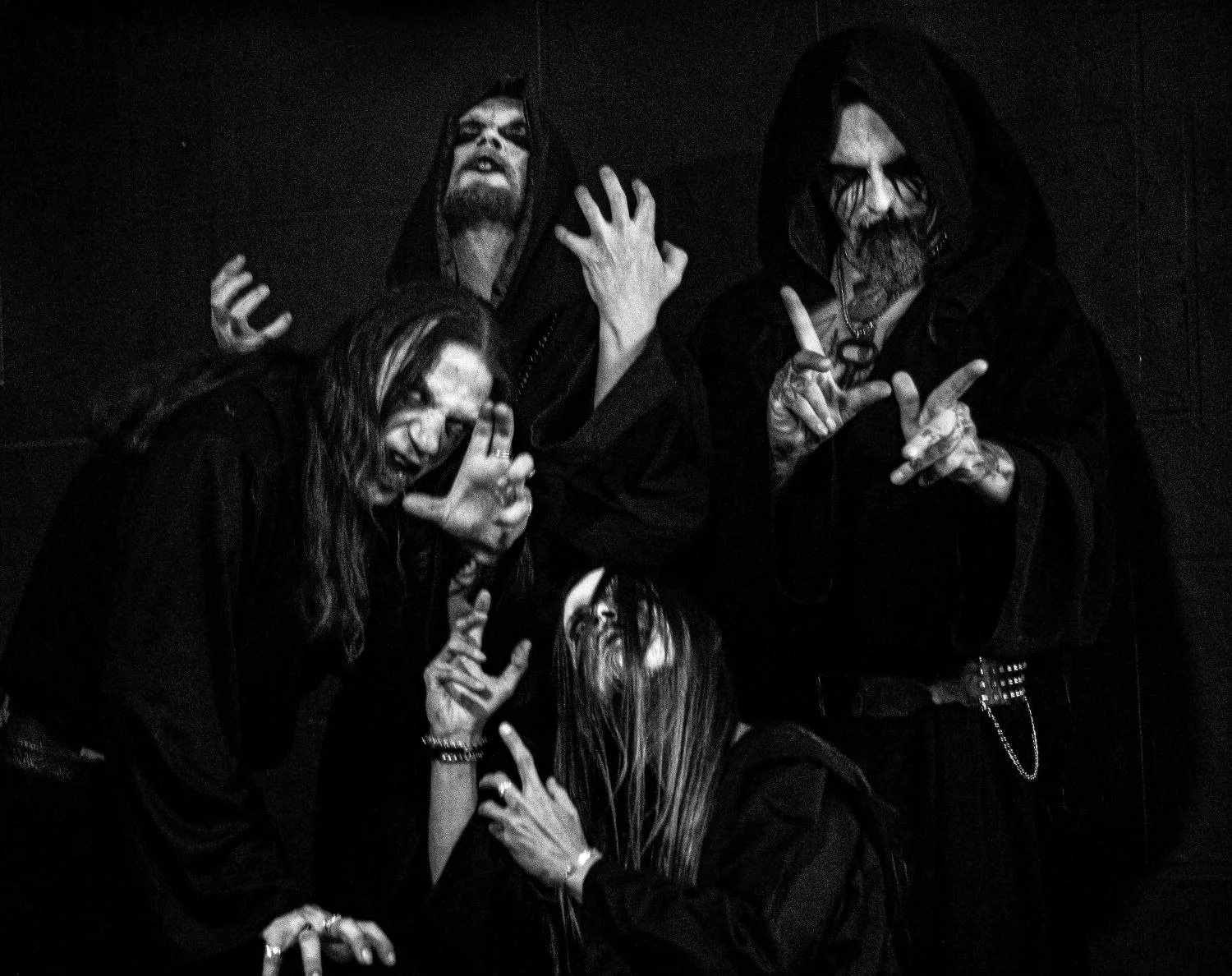
A demo ensued, members came and went, and the lineup eventually settled on Shatraug (guitars), vocalist Hoath Torog and Horns on drums. The latter two both from Behexen.
Between 2003 and 2010, Sargeist released the three LPs that birthed and cemented their reputation as purveyors of the finest quality Finnish Black Metal. All are still hailed as absolute classics that every genre fan should have in their collection - and probably does.
The inescapable evolution from 2003’s flawless lo-fi debut, Satanic Black Devotion, through the immaculate Disciples of the Heinous Path in 2005 resulted in the (almost) undisputed career high of 2010’s Let The Devil In. That LP distilled the blackened rawness of the previous two albums and doubled down on the thrashing lead-line melodies that have come to define the band in every release since.
Those gloriously uplifting, ear-worming and musical signatures that identify each and every Sargeist song are what have really laid the foundations for the band’s impeccable reputation.
I challenge any broad-minded reader, whether they’re a genre fan or not, to spend some time with Let The Devil In and not come away with a new-found appreciation for the artistry at work with and more widely, therefore, with Finnish Black Metal.
There’s something in Shatraug’s riff-writing with Sargeist in particular, that is entirely pure. It makes the chaos of the blasting, buzz-sawing, howling maelstrom of the songs coherent, accessible and, ultimately, timeless.
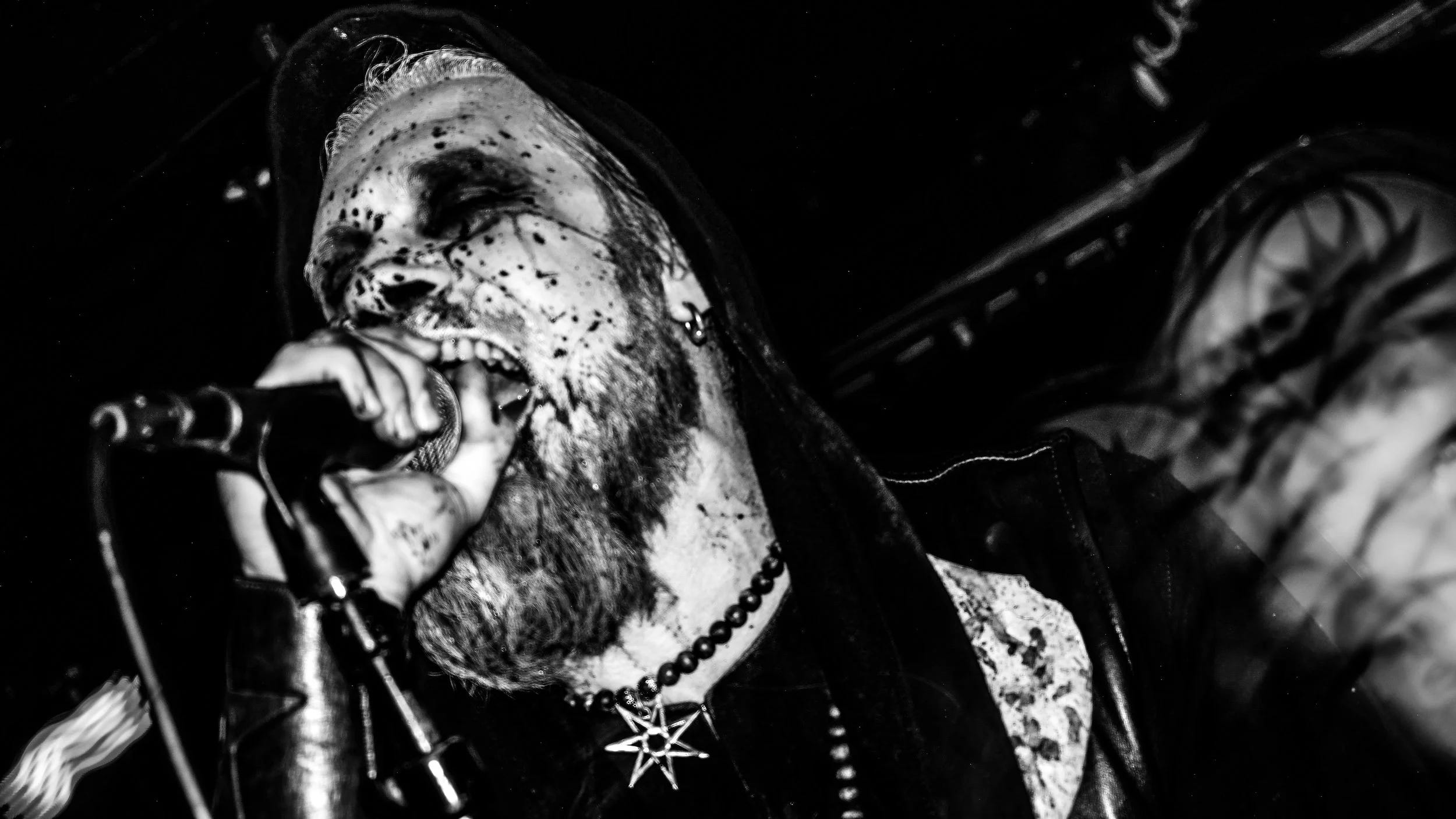
The standards implicit in Let The Devil In perpetuated through two more full-lengths - the perhaps-slightly-lacklustre Feeding The Crawling Shadows in 2014 and the return to form, Unbound, in 2018. The latter being the first LP with Profundis taking over on vocals, VJS on additional guitars and Gruft adopting the drum stool, momentarily, in Horns’ absence.
That lineup changed once again for latest record Flame Within Flame - Sargeist is moderately cursed with bassists and drummers - to Spellgoth, vocalist for Horna since 2009, picking up the bass, and Nur-I-Sayah, of 13th Moon and Demoncy on drums.
Phew.
That’s a long and complicated history. I think I’ve got it all correct, but it’s easy to miss a detail, so I invite corrections from those more knowledgeable me. It what the comments are for…
The overriding point is that Sargeist are now 27 years old and they’ve barely dropped a bollock in all that time. They are a band informed by incredible experience and songwriting expertise that spans back even further than their inception, and it shows.
Flame Within Flame, their sixth album, was released in May 2025. Frustratingly, it took nine more months before a vinyl release landed in February this year. Pressing plants. eh?
But here we are, at last, and ready to write about it.
Spoiler Alert: it’s the band’s best output since Let The Devil In.
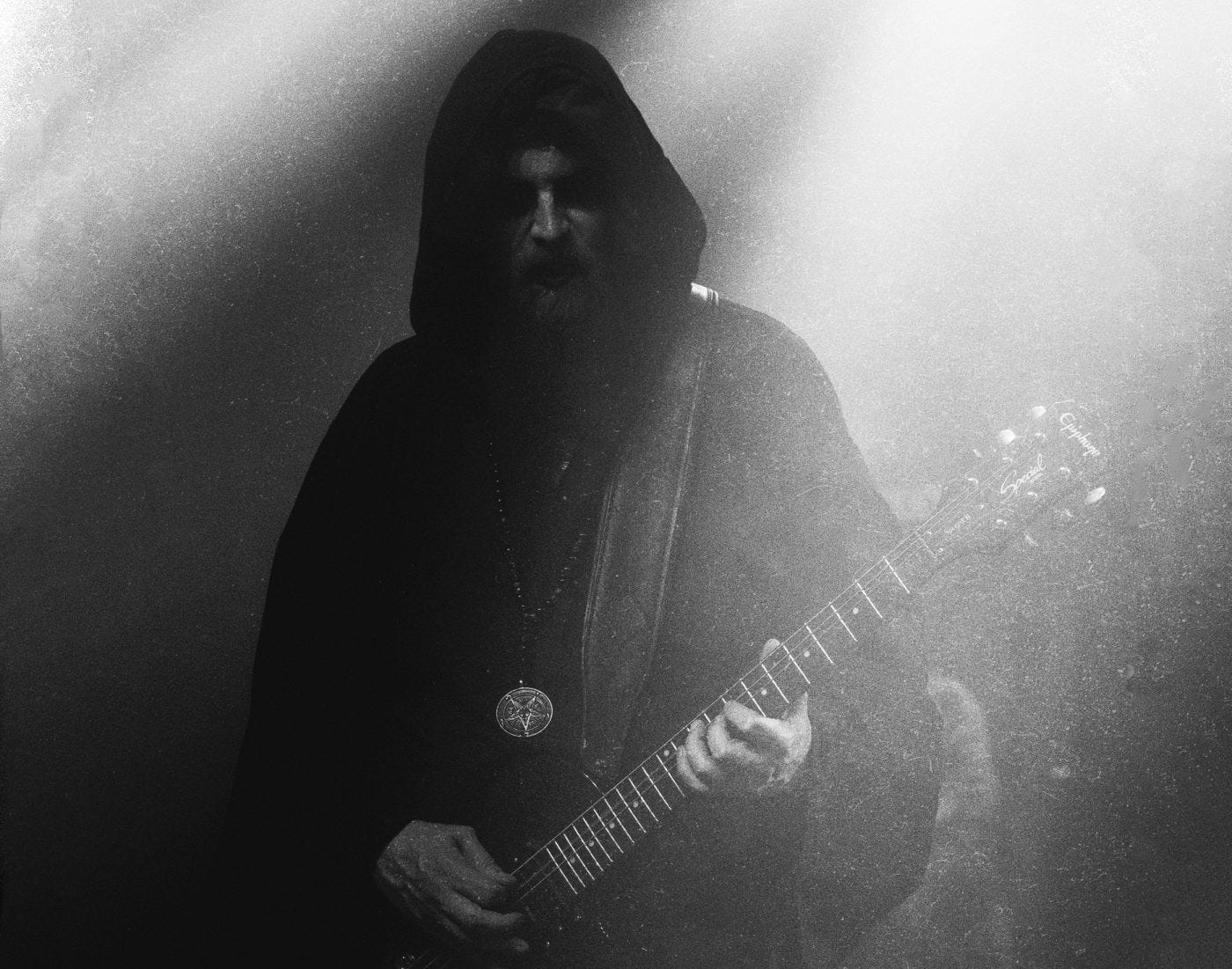
It’s generally acknowledged that Shatraug has a defining style of playing. What began as coiling, multi-barred lead-lines is epitomised by Remains Of An Unholy Past. Lose yourself in that winding lead that descends on one hand and rises on the other. Beautiful.
Hear how it contrasts with a more direct application, eight years later. The method developed into a more coherent four bar/eighth note system of dynamic repetition, which creates an undeniable catchiness. Empire Of Suffering, lead track from Let The Devil In itself is a great example of the root note descents under the pedaling main riff.
Forgive me if my terminology is inaccurate. I’m no genius of musical theory, but one listen and you’ll (hopefully) hear what I mean.
The style is often emulated, not just by Shatraug’s countrymen, but across the world. His style has become the hallmark of a sub-genre - and beyond it.
Never has that riffing style been more present than on Flame Within Flame’s opening track, An Eternal Dream Beyond The Accursed Portent.
Immediately, the song’s looping signature bursts from the speakers, voicing a keen and undiluted statement of intent. It’s almost too melodic on first listen - it dominated my first play-throughs of the LP entirely, before each successive listen gradually exposed the other tracks’ own addictive melodies.
But try going through the song a couple of times and walking away from it without having that riff skipping around the darkest corners of your cerebral cortex for the next week or so.
It’s almost an unbearably positive sounding melody, entirely at odds with the rest of the song’s more foreboding presence. It is that juxtaposition that ensures the compelling surprise that sits at the heart of Sargeist songs.
I find them more immediate and long-lasting than any of Shatraug’s work in other bands, despite adoring all of it. The stylings are present throughout his catalogue, but Sargeist is absolutely defined by it.
The title track follows. At first, it might be dismissed as moderately forgettable, but I urge you to recognise the over-the-top immediacy of the opener. You can’t help but subconsciously compare the two.
Familiarity with Flame Within Flame reveals hooks a plenty - more subtle, but just as engrossing. It’s darker, but I think that it and the track that follows it, The Chant Of Rotting Tongues are focusing their melodic engagement elsewhere. They both expose themselves, ultimately, as showcases for Shatraug’s engaging and versatile vocals. The guitars underpin them, instead of taking the forefront.
In the end, both songs become as definitive to the album as the opening track does.
What a triumphant triumvirate of an opening salvo.
Just take that looping anthemic guitar line at the end of Flame Within Flame and tell me it’s not fantastic, fist-pumping, heart-pounding songwriting.
On a personal note, I particularly enjoy Shatraug’s Abbathian croak on Rotting Tongues. And again, the elevating guitar lines just make the whole song soar.
What’s clear - and ably portrayed in the next pair of songs, Incandescence Of The Funeral Pyre and Ordained And Adorned, is the intrinsic understanding of the musician’s varying roles in the band.
I mean this in the best possible way: Spellgoth and Nur-I-Sayah address the bass and drums respectively, with a fundamental meat-and-potatoes vision that serves the songs perfectly. One of the reasons I love Black Metal so much is its built-in disdain for showboating, and Sargeist exemplify the philosophy of letting the backing instruments get the fuck out of the way and lay a bed from which the more detail and finessed aspects of the compositions can grow and flourish.
I love that magnanimity. It works. Its socialism as an artform.
Both Incandescence and Ordained And Adorned are fantastic examples of brilliant Black Metal. They are not written for spotlights. They’re written for dogmatic continuance. And they really work because of that, but each obviously has its own source of stand-out motif. Incandescence’s is the singalong vocal lines. Ordained has the most wrenching descending lead-line, buried in the mix, but becoming more and more apparent on successive listens.
Likewise, To The Mistress Of Black Magic, continues that sense of reliability. Dependable in the very best way. The track thumps with a forceful, textural rhythm, rather than darting forward at a consistent pace. Once again, the interplay between the guitar melodies and the vocal lines introduces a profoundly enigmatic and anthemic quality to the second half of the song. It means that the end result is spectacular and memorable.
However, late-album-highlight, Juravit Sanguine might steal the show: not just of the side, but of the LP. It drives with an undeniable determination, dropping down for the bridge and lifting elementally to the climbing chorus riff.
My god, it hammers brilliantly. I love it. It’s less focused on the high-toned lead-lines and more on the bass rumble and chord-driven structure, which changes things up really nicely at this late stage of the album.
It’s got a looser, punkier texture to it that lands in a deliciously spicy way.
Penultimate track, Behold Our Temples Arise, continues that motif, with chord sequences and lower-register lead-lines defining the hooks. There’s so much lift on the highs and depth in the lows.
Much like a protein turd, it feels really meaty and solid, with brief moments of articulate picking dancing over the top of the bludgeoning chords.
And then, as we hit the final crescendo run to dissolution, that addictive signature descending chord riff becomes a magical hook against the double bass drumming and, finally, Shatraug’s belching croak, alone, as the instrumentation crashes to its end.
Triumphant finisher, Rite of Ascension, with its intricate drum patterns and the double bass drum itself creating a naggingly wonderful rhythmic hook in the verse, proves that the torturous wait for this record to arrive was all worthwhile.
What a way to end an epic journey. Flame Within Flame is a perfectly balanced LP, with a production that suits it well - clarity without fuss. There is weight and definition in equal measure and it delivers a well-rounded, cornerstone album for Sargeist.
The songwriting is untouchable and the playing is bob on. There’s nothing much to criticise about it at all.
For me, this is up there, in the very highest echelons of the best Black Metal LPs of the 2000s. It’s genuinely that good. If Let The Devil In is universally acknowledged as the band’s masterpiece, Flame Within Flame proves there’s life in the old goat yet. It competes for first place. At least, it does for me.
That Sargeist can be this far into their career and deliver one of the finest examples of the genre, without fanfare or drama, just goes to show how high their quality bar is and how confident they are in their abilities.
All I can do is encourage you to give Flame Within Flame some of your time.
Bed in, because its immediacy belies a longevity and an embarrassment of riches that are waiting to be revealed, through familiarity, just beneath the surface.
It fucking ace.
Ave, Moomins!